
8th Grade Experience
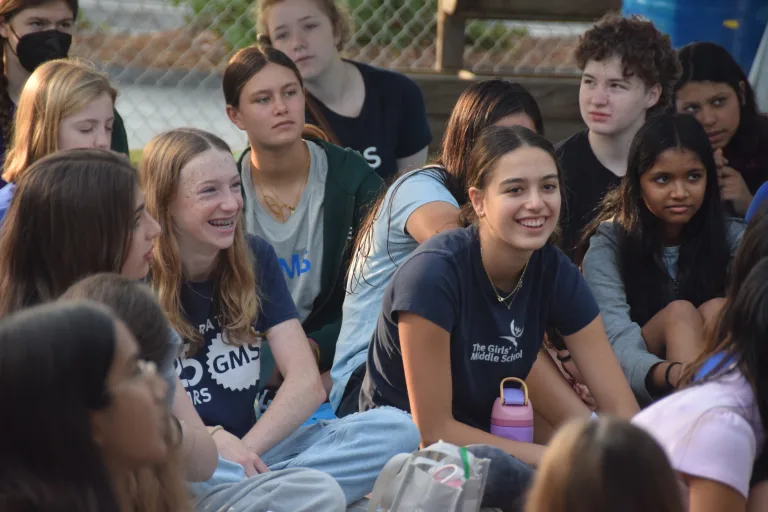
GMS girls arrive to eighth grade with a well-developed ability to self-advocate, sophisticated collaboration skills, and a strong sense of their class’ shared identity.
In a year that culminates with each girl's Personal Odyssey, eighth graders explore complex and often intense topics. Students experiment with the building blocks of nature and learn to calculate mechanical energy; they work through the quadratic algorithm in math and programming algorithms in Python; they create and perform a Shakespeare production. Throughout this journey, the students refine how they fit together as a community. Our eighth graders arrive at graduation with deep levels of self-awareness, understanding, maturity, and compassion.
At the foundation of GMS is a philosophy of growth mindset and self-discovery. Our eighth graders use the freedom GMS provides to investigate, innovate, fail and grow. We ensure the process of learning by doing is characterized by kindness and empathy. We know that by the end of eighth grade they have the tools they need to be leaders and thoughtful supporters, keen observers of life and upstanders. As one graduate stated,
…you can’t typecast a GMS girl, because a GMS girl is every girl at her best.
8th Grade Curriculum
What We Teach
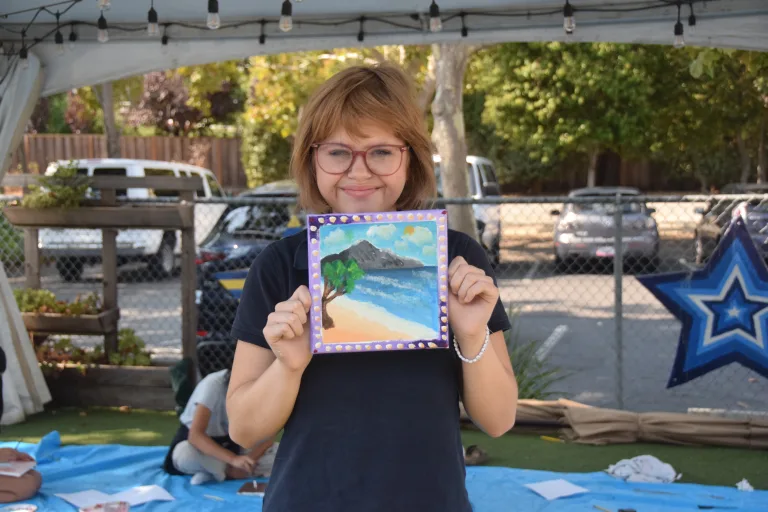
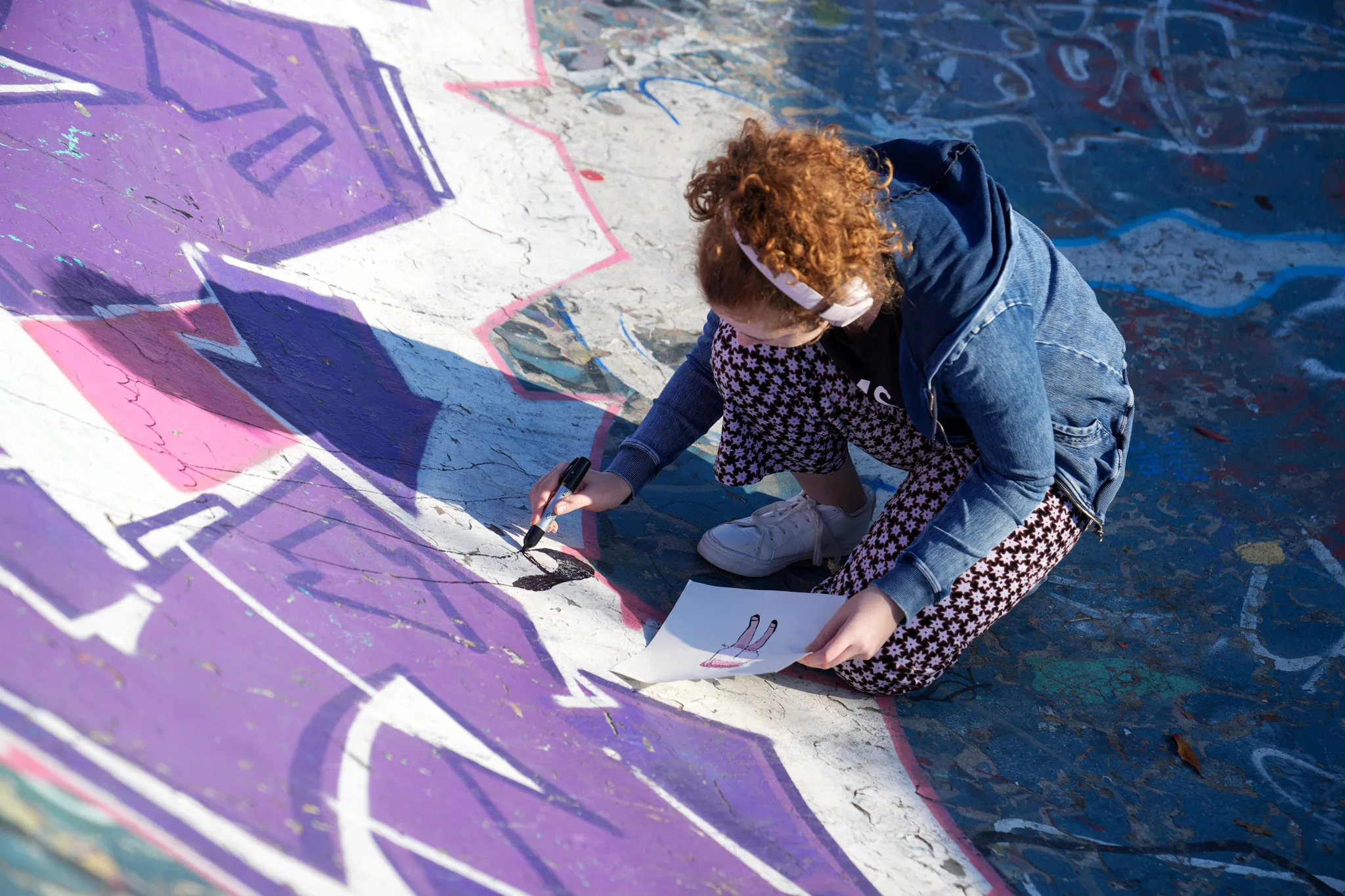
All GMS students have the opportunity to work not only in drawing and painting, but also in ceramics, woodworking, metalworking, music, drama, photography, and video production. In exploring these wide-ranging media and techniques, students gain confidence in their ability to experiment and take creative risks. At the same time, they are exposed to powerful tools for finding and expressing their voices and have opportunities to discover one or more ways to express their vision.
Why We Teach It
Serious engagement with a broad range of arts and media is central to the GMS approach to education. In these courses, students learn to be comfortable with pushing their limits, become creative problem solvers, and think critically about the visual, musical, and dramatic cultures of which they are both consumers and producers.
What We Teach
The GMS Computer Science curriculum provides a broad overview of concepts with an emphasis on programming skills and computational thinking. We address questions such as:
- How do computer hardware and software work together?
- How does the “design-code-test” cycle apply across different scenarios?
- How can we break down complex problems into basic building blocks?
GMS prepares students to identify which problems technology helps us solve and to express themselves through technological media. Through a variety of computer languages and tools, all students create effective and useful computer programs.
Why We Teach It
In today’s society, computer science is an essential tool. We prepare GMS students to sit at the table and be leaders in any field, and technology is no exception. We prepare them to identify which problems technology can help us solve, to express themselves and their interests through technological media, and to design and implement their ideas. Students experience the joy and satisfaction that comes from conversing with the computer and using it to devise new solutions, while gaining the confidence to apply computer science in creative ways in their lives.
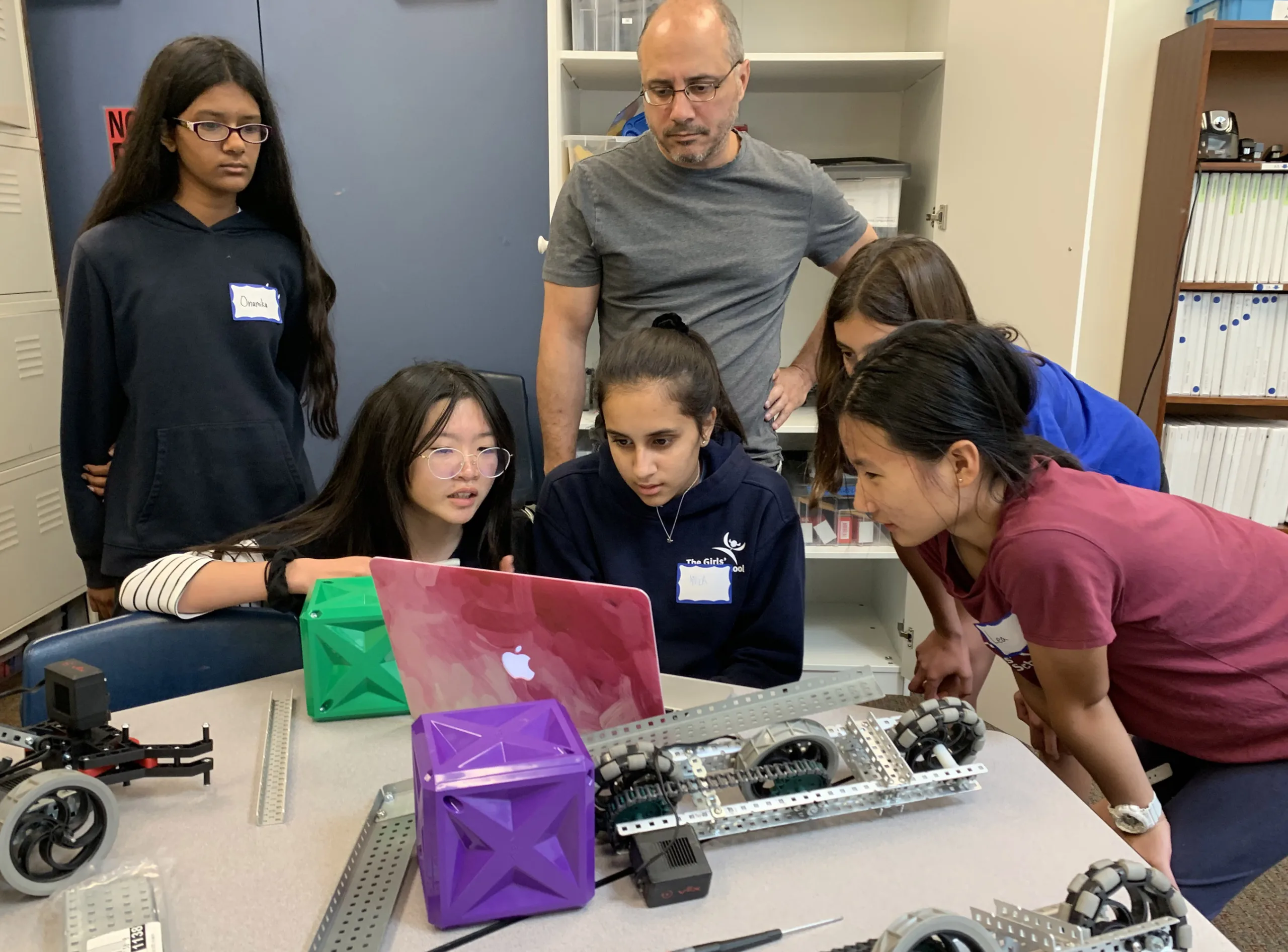
In eighth grade Computer Science, we dwell on the underlying basics of how computers work, and continue to cultivate the programming knowledge begun earlier in the curriculum. Together, we think about how the notion of simplification or “abstraction” plays an important role; and then apply that knowledge appropriately in a programming context. The concepts of “data” and “programs” are thoroughly explored, forming a foundation upon which many important computer science concepts can be built.
Digital Information – “Data, Data, Data!”/“Digitization and Design (2D & 3D)”
Everything that is represented within a computer environment must be digitized, but what does that really mean? Starting from the basics of informational encoding, we will simulate the process of digitization for text as well as 2-D and 3-D images. This unit culminates in a large programming project in which a 3-D model of the entire classroom is rendered from code, demonstrating contemporary computer graphics techniques as well as the practice of participating in a complex collaborative software endeavor.
Electronic Basics – “Touring the Chibi Circuit”
Knowing how to approach computers from the software side is essential, but what about the hardware? For this short section, we will explore circuits, currents, switches, and more to build students’ intuitions for the way their electrical devices work on a physical level, as well as giving context for the ways those material structures lead to the concepts exhibited in digitization and code.
Writing & Understanding Code – “Programming in Python (Intro & Personal Project)”
Expanding upon the seventh grade introduction to Python, we will have a chance to grow our skills by creating increasingly complex programs that include more interactivity and require more planning. The skill of reading programs written by others and expressing algorithms in “pseudocode” will be emphasized as important pre-programming skills. Students will gain more experience and facility with the important elements of variables and functions, conditionals, and loops, and are expected to combine them in original ways to create expressive programs of their own choosing.
What We Teach
The Humanities Department at The Girls’ Middle School integrates language arts with social sciences, an approach that encourages students to develop an awareness of themselves, their community, and the world. Beginning in sixth grade, students investigate what it means to be a member of a community, broadening their perspective and helping them to understand commonalities in the human experience. In seventh grade, students analyze American society by drawing connections between key literary works and major events in United States history, placing special emphasis on the contributions of changemakers and the perspectives of artists and authors. In eighth grade, students look through the lens of justice to study history, literature, and culture around the world. Through the process of reading, writing, listening, and speaking, students become independent and critical thinkers.
Why We Teach It
The GMS Humanities Department prepares our students to become powerful communicators, deep thinkers, and positive contributors to a just society. The curriculum encourages students to think critically and make connections to a wide range of texts and disciplines. We nurture and support creativity, growth, and expression, and students develop the ability to communicate their ideas thoughtfully and fluently throughout the process.
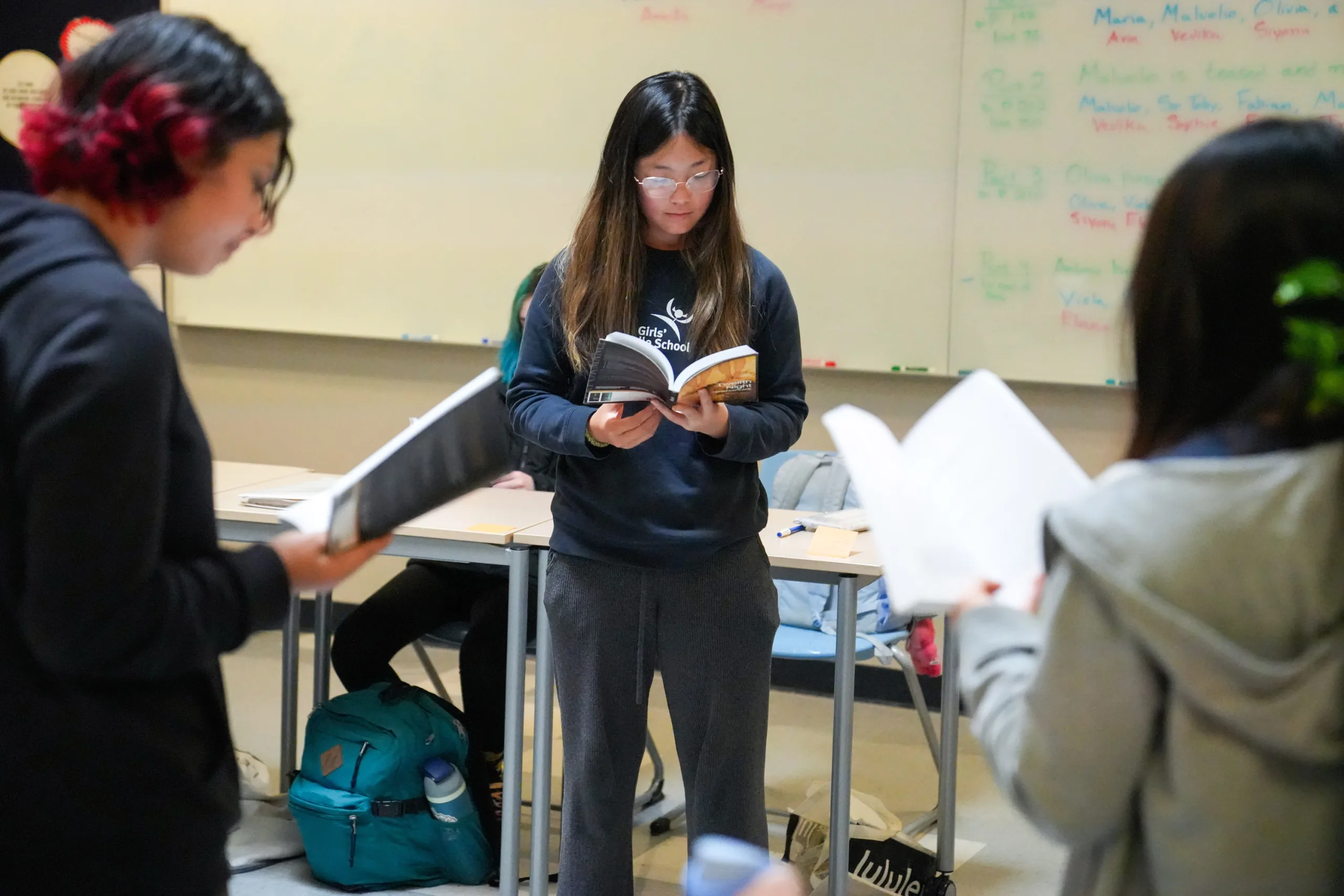
Eighth-grade Humanities builds upon the knowledge students have acquired in their sixth and seventh grade Humanities courses, seeking to integrate world history through an examination of contemporary life and literature. The primary thematic lens that we use to focus our study of the present is identity, in all the ways we define it. We read a wide range of primary sources and literature, and we write on a daily basis in a multitude of forms, from poetry and short fiction, to longer essays and responses to literature.
Unit One | Abuse of Power and Human Behavior
Essential Questions: Who decides what is considered right and wrong? Why do individuals become bystanders and what are the consequences? How do certain individuals stand up to the abuse of power? How does a person’s identity shape their experience of an event?
Primary Texts: Night by Elie Weisel, primary and secondary sources, and an independent reading book with a theme of the Holocaust
Key Project: Compare & contrast assertion essay on Night and related independent reading book
Unit Two | Immigrant Identities
Essential Questions: How do family history and traditions contribute to a person’s identity? How do differences in identity impact relationships?
Primary Texts: The Joy Luck Club by Amy Tan, excerpts from other authors including Firoozeh Dumas and Jhumpa Lahiri, primary and secondary sources
Key Project: Research and creation of dramatic dialogues exploring character voices
Unit Three | Colonialism in the Caribbean
Essential Questions: How is a person’s identity shaped by others, society, or self? How does power, the desire for it or the loss of it, affect one’s experience of an event? How does “othering” an individual or group of individuals affect their identity?
Major Text: Play by William Shakespeare, primary and secondary sources, current articles
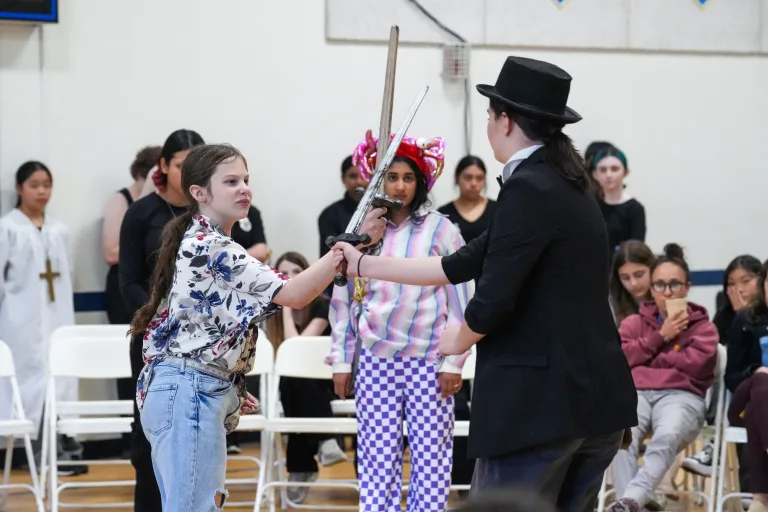
Key Project: All the World’s a Stage independent projects, research presentations on colonialism in the Caribbean, theatrical performance of a scene, essay with literary analysis
Unit Four | Revolution
Essential Questions: What is the relationship between individual and group identities? What can you do when society does not value your voice or culture? What impact does society in crisis have on individuals?
Primary Text: Persepolis by Marjane Satrapi, primary and secondary sources, current articles
Key Project: Creating a graphic “next chapter” for Persepolis
Writer’s Workshop ~ Yearlong
Overview: Writer’s workshop is a yearlong exploration of students as writers in which students generate short pieces of any genre, give and receive feedback on drafts with their peers, and revise each piece. This gives students the opportunity to grow as a writer, develop stamina, practice giving clear and constructive feedback, and produce a portfolio of revised pieces to reflect upon by the year’s end.
Primary Text: Students’ work, short teaching excerpts from various authors
What We Teach
In a GMS math class, students investigate, communicate, and solve problems; they discover connections between concepts through deep exploration, not through the memorization of algorithms. Group conversations are central to our curriculum, CPM Educational Program. These discussions uncover multiple solving strategies, representations, and ways of thinking.
Sixth grade is a foundational year; students learn to articulate their reasoning, which helps build their number sense. In seventh grade, students continue to develop their problem solving, proportional reasoning, and abstract algebraic understanding. Emphasis is placed on a foundation of linear equations and geometric relationships. By the end of eighth grade, all students complete the equivalent of a Common Core State Standards High School Algebra I course, which includes linear, quadratic, and exponential functions, as well as the modeling of single and bi-variate data.
Why We Teach It
The math department teaches the way we do because we want to encourage an enthusiasm towards math. We intentionally create meaningful experiences in the classroom that lead students to discover and understand underlying mathematical principles. We want all students to appreciate the inherent beauty of math; through collaboration in class, we hope to foster a sense of wonder and fun!
Every day, we aim for students to:
- Be pattern seekers and view the world through “math eyes.”
- Use the following five ways of thinking to approach mathematics – justifying, generalizing, making connections, reversing thinking, and applying and extending understanding.
- Develop mathematical reasoning skills and persevere in solving complex problems. Effectively communicate their thinking about mathematical concepts in written, oral, and graphic form.
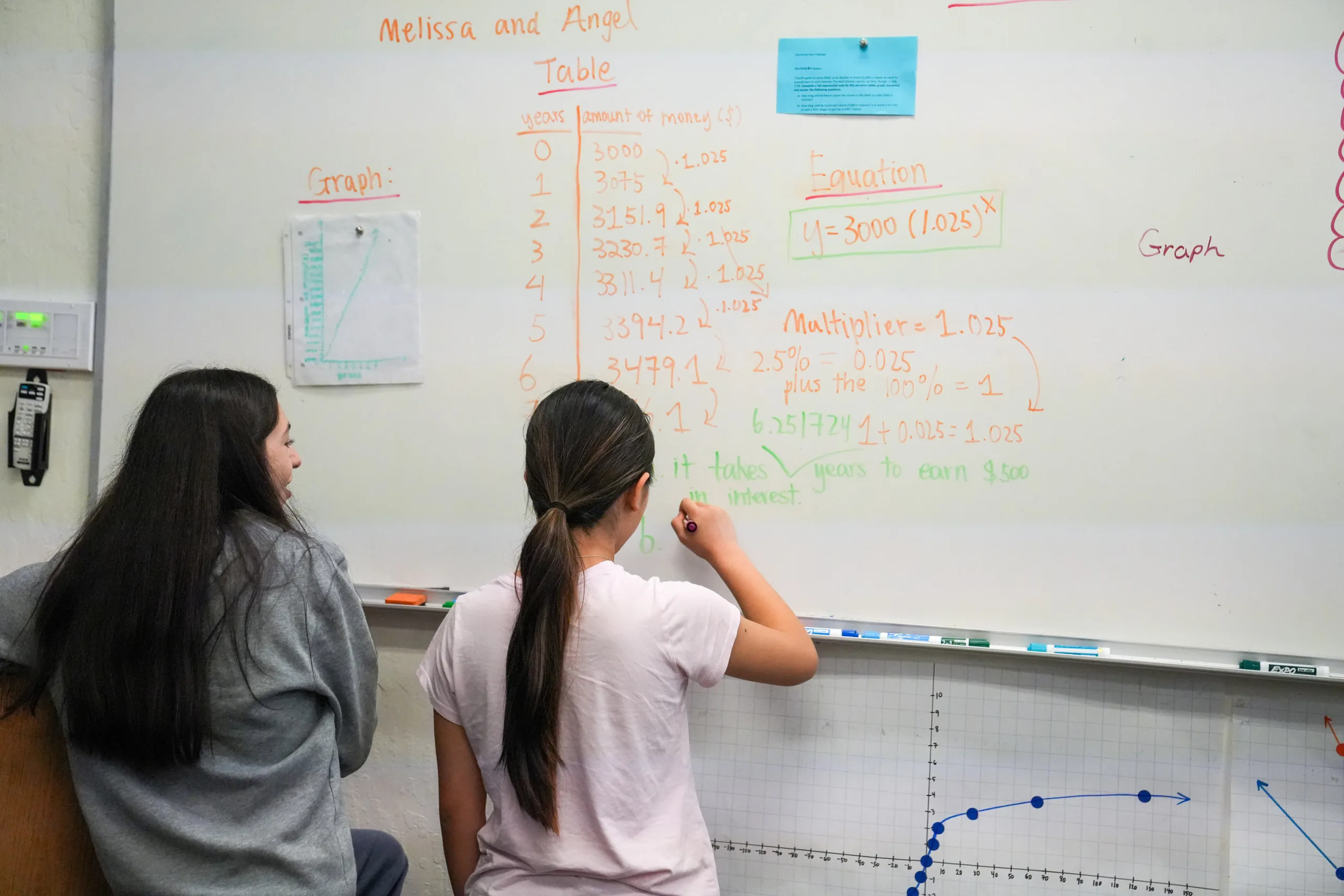
Eighth grade completes a comprehensive Algebra I curriculum using Core Connections Algebra, a CPM text. The approach of this curriculum is for students to make connections, discover relationships, determine multiple strategies to solve problems, and explain their thinking. In math at GMS, students are asked to think in order to problem solve, not just memorize algorithms. Additionally, emphasis is placed on making mistakes as a critical part of the learning process. Students participate in a combination of group investigations, whole class discussions, and independent practice.
Units of Study
Chapter 1: Functions
Chapter 2: Linear Relationships
Chapter 3: Simplifying and Solving
Chapter 4: Systems of Equations
Chapter 5: Sequences
Chapter 6: Modeling Two-Variable Data
Chapter 7: Exponential Functions
Chapter 8: Quadratic Functions
Chapter 9: Solving Quadratics and Inequalities
Chapter 10: Solving Complex Equations
What We Teach
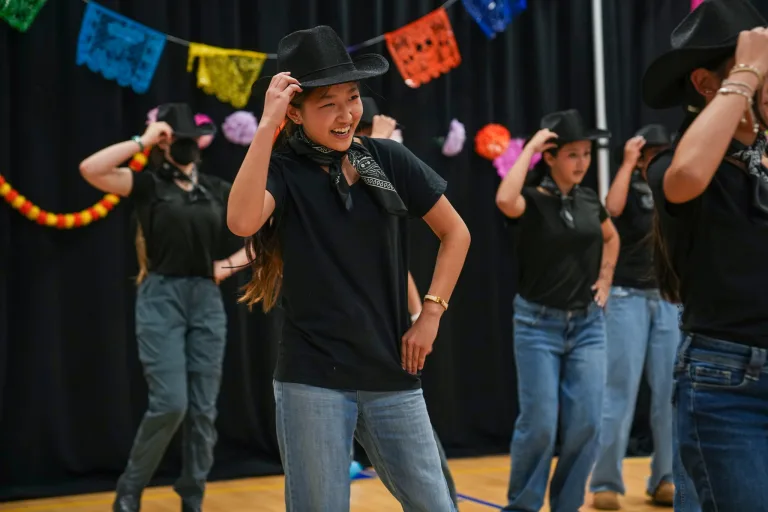
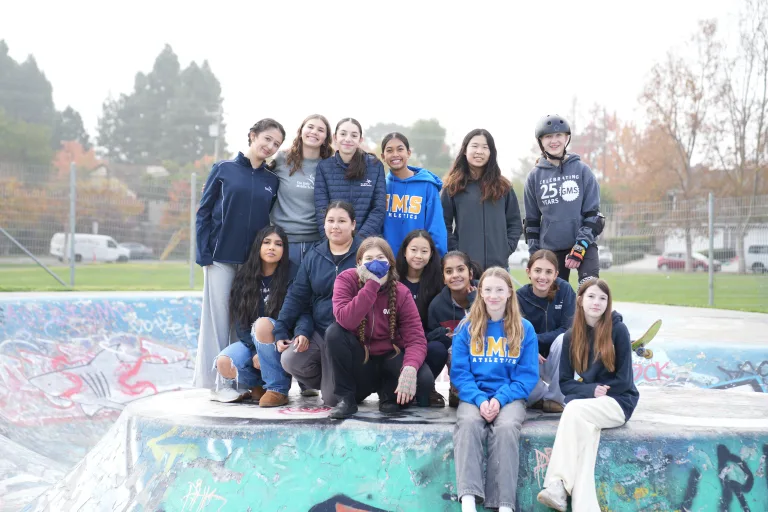
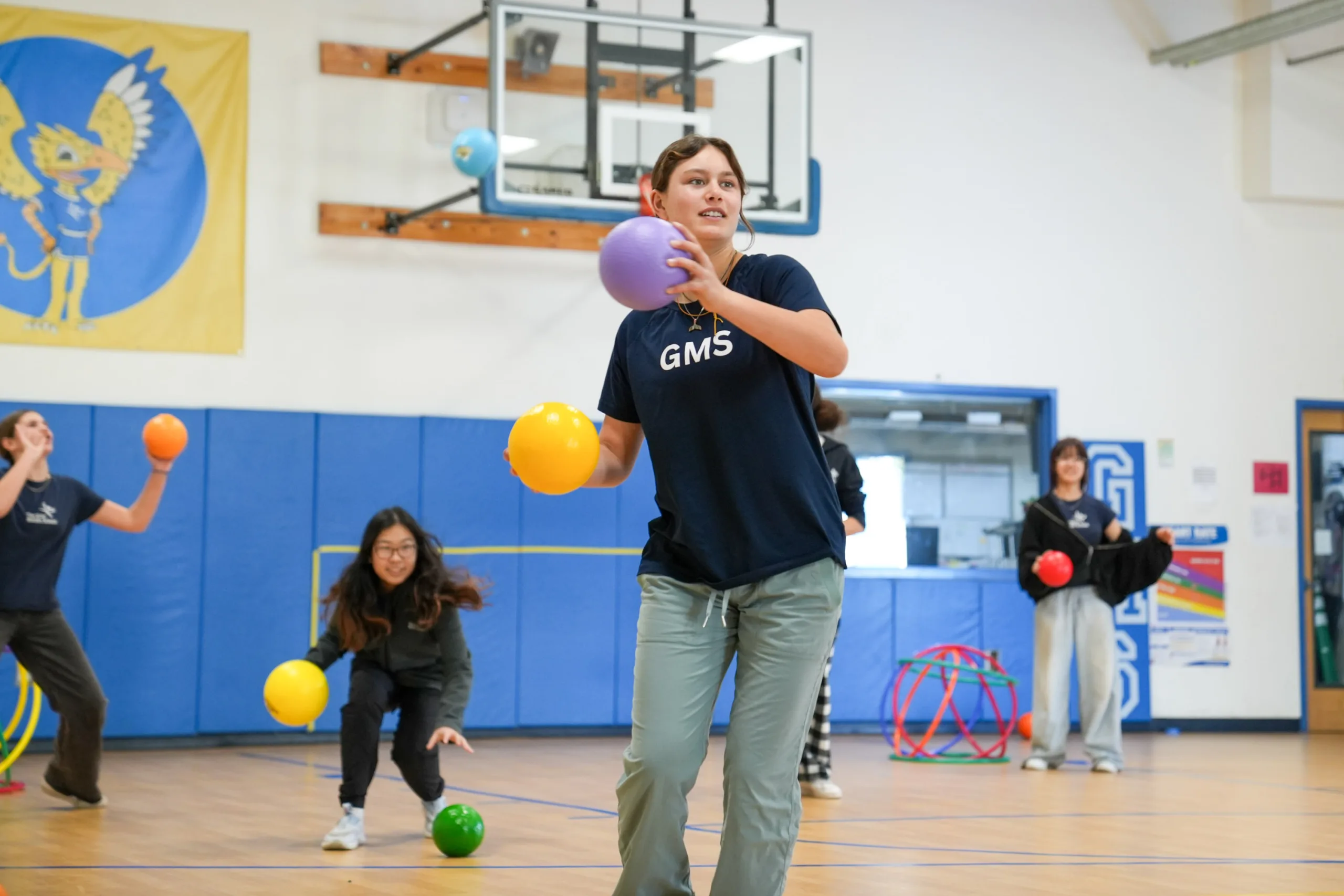
Physical Education classes include traditional sports such as basketball and volleyball, as well as nontraditional activities such as self-defense and skateboarding. GMS is proud to have a covered skateboard ramp and all of the necessary equipment to run a skate program. Highlights of the rainy season include fitness and African dance. Students are able to track their athletic improvement through fitness tests and various team challenges.
Girls discover sports by playing games to learn the rules and techniques rather than practicing repetitive drills. This approach to learning allows all girls to participate in every PE class and to work as a team to help each other improve. Units of study include softball, soccer, basketball, volleyball, lacrosse, tennis, flag football, track and field, fitness, running, African dance, self-defense, and skateboarding.
Why We Teach It
The physical education curriculum teaches the importance of being and staying healthy, and gives GMS girls the opportunity to learn and play sports in a positive environment. Making PE classes fun draws the students in, and they participate and exercise because they enjoy it. Finding the right type of exercise for each girl, whether a team or individual sport, is the goal. All students are expected to be involved to some degree all of the time. Students will test their skills at the end of a unit by competing in tournaments and playing on randomly organized teams.
What We Teach
The GMS science curriculum focuses on building science skills across students’ three years as they move through different disciplines. Sixth-grade students study Earth Science, which includes exploring Earth’s systems and Earth’s place in space. In seventh-grade Life Science, students study evolution, body systems, and science ethics, growing an understanding of the relevance and importance of science to our bodies and lives. Eighth-grade Physical Science includes both chemistry and physics using hands-on experiments to better understand how the world works and why taking care of our world matters.
Why We Teach It
We believe that science is accessible to every student. Each student’s inquisitive mind already makes them a scientist. In the words of Ellen Ochoa, the first Latina astronaut in space, “Curiosity is probably one of the most important characteristics that people have who go into science.” Science is a natural process of observing phenomena, wondering how the world works, and searching for answers in order to make sense of the world. Every student at The Girls’ Middle School is a scientist who learns and practices the skills that professional scientists use in their daily endeavors. Because science is a way of understanding the world around us, rather than a collection of vocabulary words and facts, the students engage in many hands-on explorations, inquiries, and projects as they explore the natural world.
Chemistry & Physics
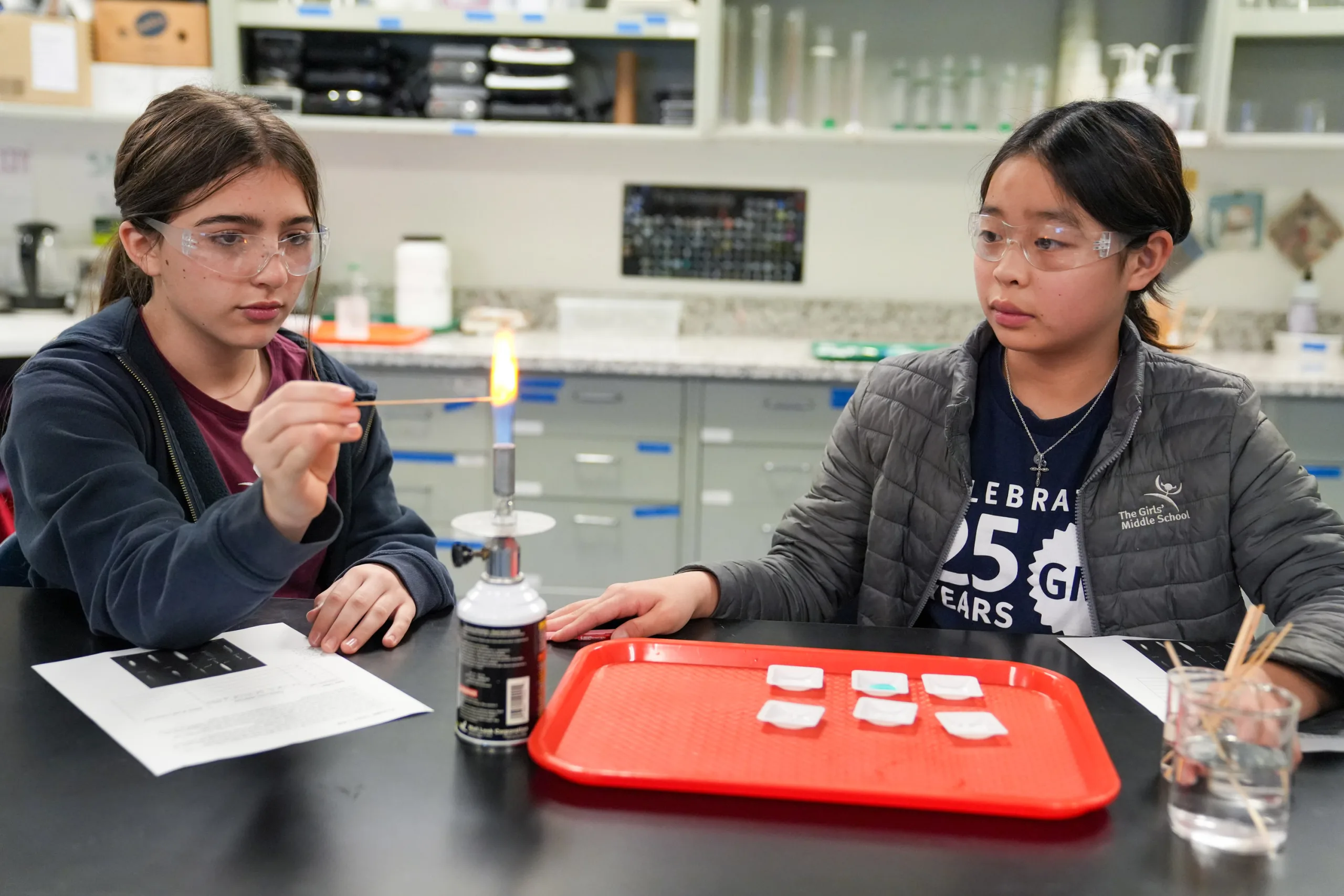
In eighth-grade science, students will learn about physical science concepts and engage in a variety of labs and projects. At the beginning of the year, students explore matter, chemical properties and reactions, and the elements around us. Students work through hands-on labs and projects in order to learn through the process of inquiry, testing, analyzing, and reflecting. During the second semester, students are introduced to Newtonian physics, more specifically energy, force, and motion. They analyze the world around them in order to apply theory to the physical space. Students will develop the skills to create experiments based on choice, where they can pick and choose the materials, variables, and type of concept they would like to explore.
What We Teach
The Social and Emotional Learning (SEL) Program at The Girls’ Middle School supports every GMS student in their transition into the teenage years, providing them with the skills necessary to develop into a strong, healthy, self-aware young person. In a course that meets weekly for all three years at GMS, students have a safe space to explore complex issues. Within this framework, the SEL course addresses numerous topics of concern to teens with both candor and sensitivity. These include effective communication skills, values clarification, healthy relationships, conflict resolution, human sexuality, drug education, diversity, and self-awareness.
Why We Teach It
In SEL, emphasis is placed on creating a caring and compassionate environment in which adolescents learn that they are supported, as well as how to support one another. The class provides the time and space for GMS students to build healthy identities, examine their own internal worlds, and begin to understand themselves and expand their autonomy, which is central to adolescent development.
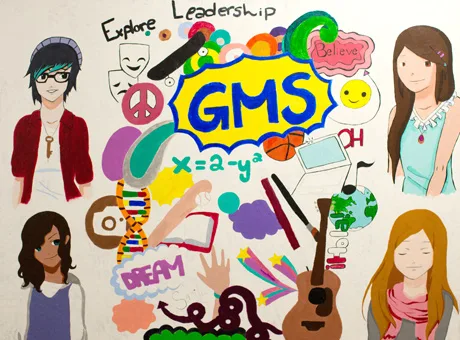
Eighth grade is the apex of the SEL curriculum; the students have gained a comfort with themselves and their peers, allowing for a depth of authentic conversation that creates meaning in many aspects of their lives. Students continue their development in understanding themselves and others and further their insight and ability to see themselves as proactive members of a global community. Drug education, values clarification, and assertiveness skills are also an important part of the eighth-grade curriculum. Genuine curiosity and questioning leads to greater self-discovery. By the end of eighth grade, the students have developed a strong sense of self and how they want to interact with the world.
What We Teach
The Spanish department’s mission is to encourage students to appreciate and connect language and culture to the real world by improving their understanding of Spanish. Advancing students’ speaking, listening, and writing skills, while motivating them to learn and love Spanish, reinforces the importance of being bilingual in California. Each student understands that learning Spanish requires focus, motivation, practice, and a willingness to use Spanish during classroom activities and on a daily basis.
Spanish classes at GMS help improve fluent and non-fluent speakers’ literacy skills; however, it takes more than just skills to become a fluent or successful Spanish speaker. At GMS, each student engages in an individual and group Spanish-learning process that embraces an inclusive learning environment with engaging discourse and innovative instructional technology. Providing a respectful, rich, and safe classroom environment ensures that every student is able to apply herself, take risks, make and rectify mistakes, and work on her understanding and use of the language during her three years in the GMS Spanish Language Program
Why We Teach It
Spanish at GMS is an interactive program designed to provide a rich learning environment to our students. In both the fluent and the non-fluent speakers’ classes, students experience an engaging learning environment that uses challenging, exciting, and fun Spanish activities in the classroom and within the Latino community to enhance understanding of the Spanish language and its diverse culture and heritage.
Course Description
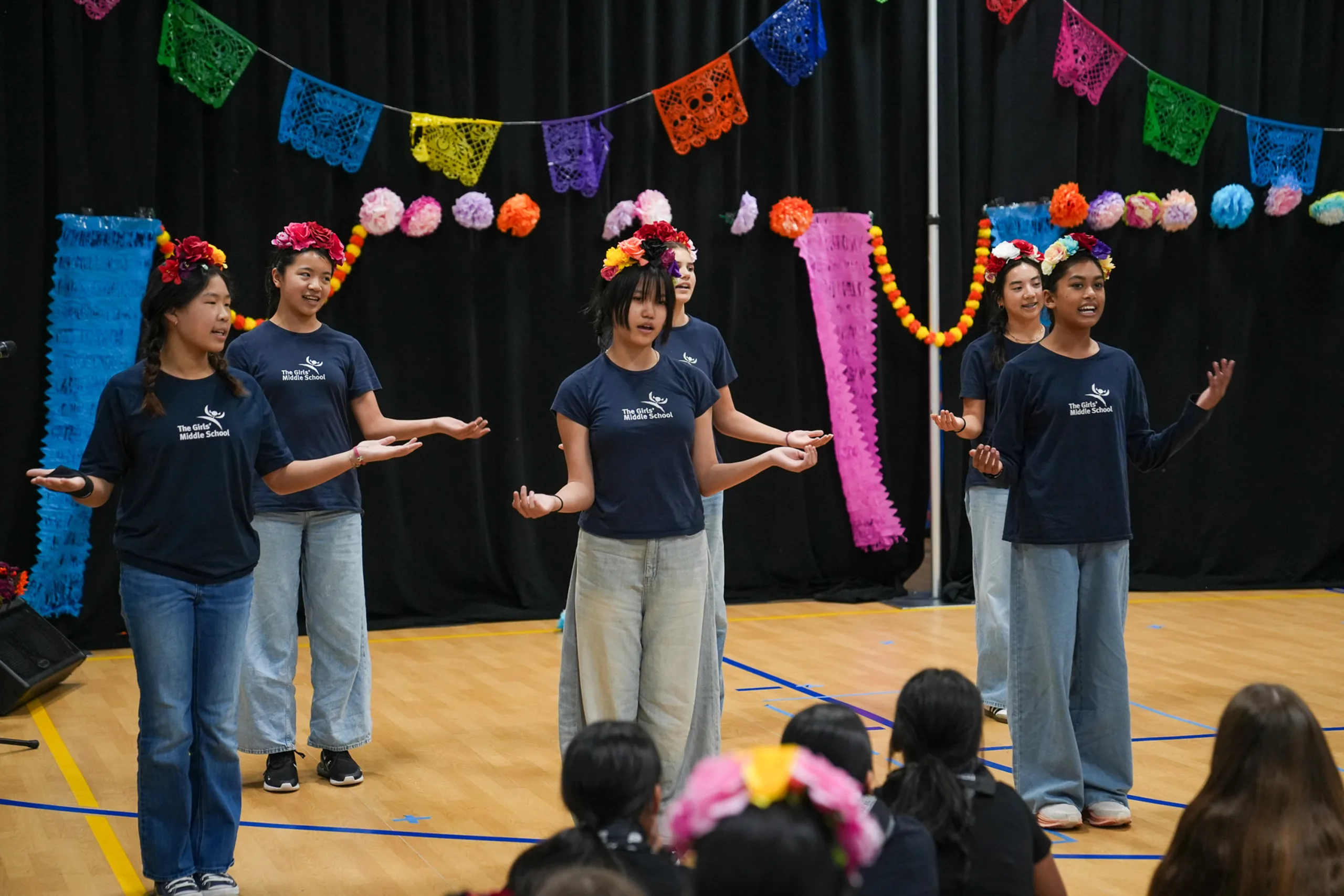
Eighth-grade Spanish as a Second Language is an interactive course designed to provide a rich learning environment with a social justice emphasis where students experience and connect language and culture with real-world life. By practicing different language learning techniques, students select their learning system to apply and review grammar skills in various oral and written exercises and projects. Literacy skill components include listening, verbal, reading comprehension, and writing. This course connects multicultural activities with the preparation for the Day of the Dead, the Spanish Poetry Contest, and general cultural and language preparation for Puerto Rico’s trip.
As an essential component of this course, students explore and learn different concepts, such as immigration, racism, morality, and courage, through cultural and language activities. Every unit of study is reinforced with technology resources and by completing pairs and group projects.
Educational videos, games, melodies, and acting reinforce each cultural and language unit. At the end of eighth grade, students have functional proficiency by practicing and improving their thinking process in the target language. In addition, students should be able to apply Spanish vocabulary in oral and written presentations, employ grammar skills in the present, past, and future tenses, participate in conversations, read, tell stories, and write summaries in Spanish.
Units of Study:
Unit 1: Immigration
What is immigration? Why do people immigrate?
Students will review 7th-grade grammar skills by reading a TPR book, “El viaje de su vida,” and practicing vocabulary and grammar in diverse written and oral exercises. In addition, stories connected with the natural world and our community will cover the immigration unit.
Unit 2: Racism
What can you do individually to avoid racism?
Students will explore the concept of racism by making language and cultural observations on real-life stories of people from different cultural backgrounds. Approach the racism concept by reading newspaper articles related to racism situations happening in the community. Students will practice the present tense in other written and oral exercises on grammar.
Unit 3: The Day of the Dead in the Mexican Culture: Comparing Cultures
What represents the Day of The Dead in Mexican Culture?
This unit focuses on an ancient indigenous Mexican holiday, and it aims to enrich cultural appreciation, values, and traditions from other cultures. Students also make linguistic and cultural observations by interacting directly with hands-on activities while preparing for the Day of the Dead ceremony. While training with cultural activities, students are connected with language by learning and practicing grammar in diverse written and oral exercises.
Unit 4: Morality
What is morality?
Students study the concept of morality by reflecting on respect for diverse cultural backgrounds, where caring and citizenship are essential values in this process. In terms of grammar, students are introduced to using and applying regular verbs in the past tense by reading brief stories related to morality and learning how to apply connective words and reflexive pronouns in oral and written exercises.
Unit 5: Courage
What is courage? How do you express your courage?
Students engage in brainstorming activities describing the concept of courage and expressing these main ideas on diverse projects, such as reflecting on Frida Kahlo’s paintings. In grammar, students exercise regular and irregular verbs in the past tense, adjectives, and reflexive pronouns in stories related to courage.
Unit 6: Poetry Experience and Contest
How do I perform a poem in front of an audience?
Students engage in hands-on activities by selecting a Spanish-language poem, understanding vocabulary, developing reading comprehension in poetic or figurative language, memorizing the poem, and practicing how to recite a poem in front of the group. These activities promote the ability to search for and plan a written project individually and in teamwork.
Unit 7: Puerto Rico Research Project
How do I present an oral presentation of my research project in front of the group?
Students engage in hands-on activities by preparing an oral presentation related to Puerto Rico. The presentation will be based on a research project written in teams by selecting a topic related to Puerto Rico’s history, costumes, culture, and traditions. Students will develop the skills of presenting a subject with proper Spanish pronunciation and applying a wide variety of new vocabulary.
This course reinforces and develops students’ Spanish skills: writing, listening, reading, and speaking. Students improve their proficiency by analyzing pieces of literature, connecting ideas, writing responses to readings, doing research, writing stories, and making oral presentations. The goal is to increase students’ confidence as writers, listeners, and speakers of the language, and to broaden their appreciation for other cultures.
Unit 1: Oral Tradition
How do stories pass from one generation to another in settings where writing was not essential? Cultural context: La Nueva España before and after the Conquest.
Reading: La Llorona
Movie: La Llorona
Grammar: preterit tense, regular and irregular verbs
Project: Analyze the movie and the reading; compare and contrast both characters and plot.
Unit 2: The Day of the Dead in the Mexican Culture
We focus on the Indigenous holiday, Día de los Muertos, celebrated in Mexico. How did it begin? How and why is it fused with the new religion brought to Aztec territory by the Spanish?
Cultural context: México in the time of Porfirio Díaz, José Guadalupe Posadas, Diego Rivera.
Readings: El Altar, La Ofrenda, La Catrina
Movie: El libro de la Vida
Grammar: Present Progressive
Project: Write a new ending for the movie
Unit 3: Dictatorships and their consequences on people
What does it mean to live under a dictatorship? Why is it important to document and tell a story?
Historical context: The Dominican Republic under Rafael Trujillo’s rule.
Reading: Antes de Ser Libres by Julia Alvarez
Movie: In the Time of the Butterflies
Grammar: Conditional and Imperfect
Project: Write an essay explaining the meaning of “Libertad” according to the book and the movie.
Unit 4: Mexican Independence/Guanajuato
In preparation for the Mexico Trip, this unit focuses on the history of Mexican Independence, as well as the preparation of the students’ presentation for this trip.
Historical Context: events leading to the Independence movement in Mexico in 1810.
Reading: Research on the Mexican Independence movement
Movie: Héroes de la Patria
Grammar: Review of the concepts learn to prepare their lesson plans,
Project: Prepare a lesson plan to present and work with the children in the rural school we will visit.
Unit 5: Poetry
In preparation for the Spanish Poetry Contest, students review the concepts of poetry writing.
Readings: A variety of poems by Spanish, Chicano, and Latino-American writers
Project: Illustrated Poetry Portfolio