
6th Grade Experience
The sixth grade team greets our sixth graders with intention and purpose. Together we work hard to build a strong community. We have shared language that guides us daily.
This is our place. Connect. Explore. Reach. Play. Care. Be present. We are all in this together.
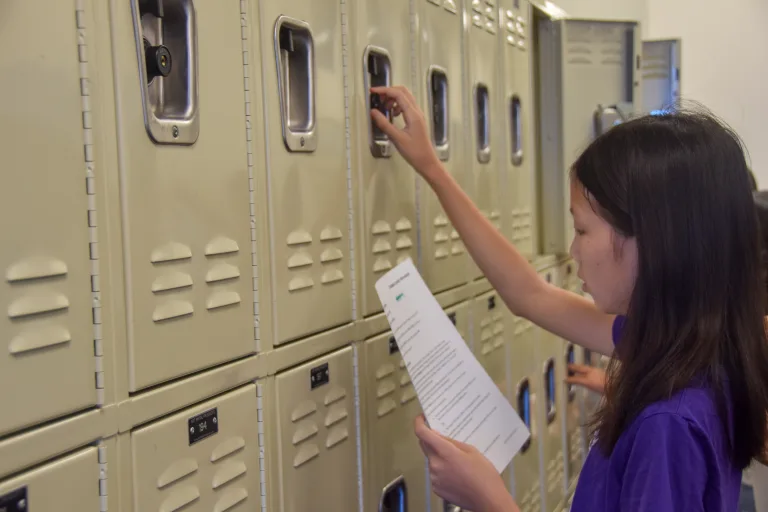
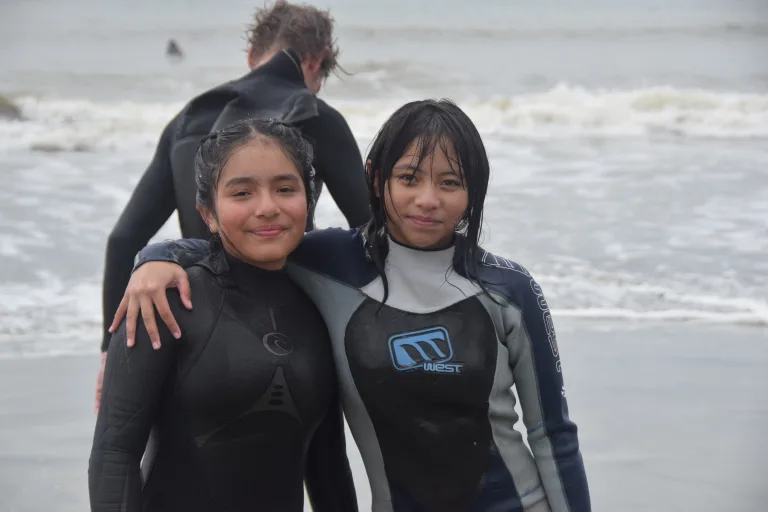
Before the academic work begins, the sixth grade team provides opportunities to cultivate the spirit of community. The year opens with Sixth Grade Orientation, several days together on campus prior to the arrival of the seventh and eighth graders. The students become familiar with their new surroundings, peers, and teachers. The year continues with Adventure Days. The whole grade bonds with each other through surfing at the beach, hiking, developing trust through games, and sleeping over at school.
The curriculum is based on the needs of the sixth graders, keeping in mind both individual needs and the needs of the community. We guide our students, teaching them collaboration and relationship building.
6th Grade Curriculum
What We Teach
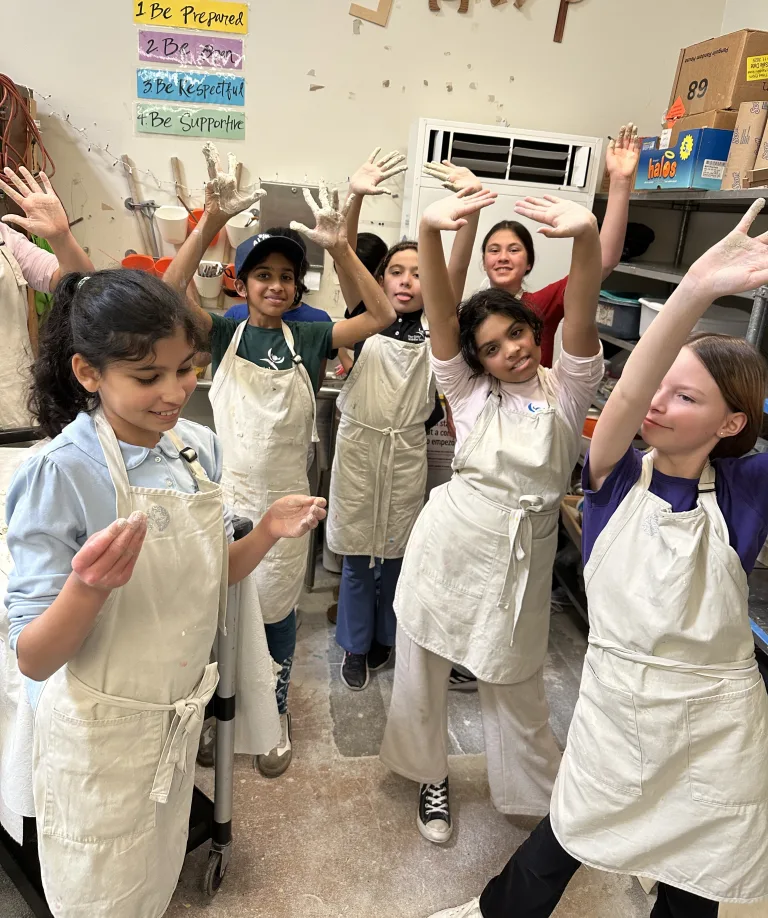
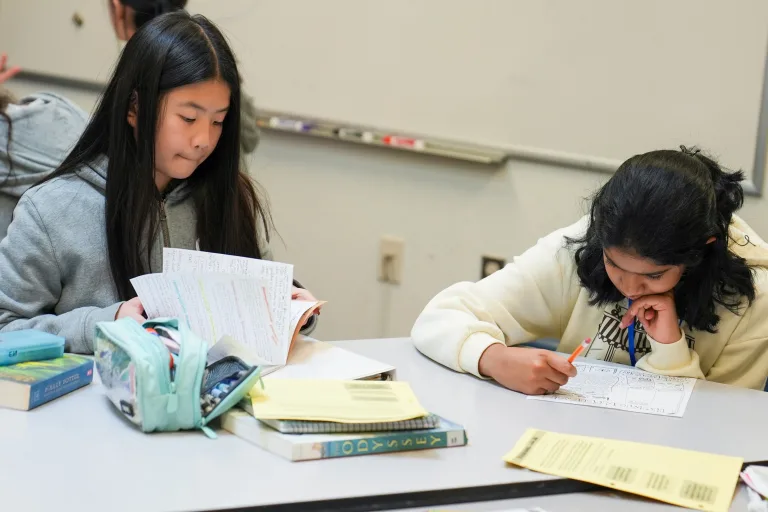
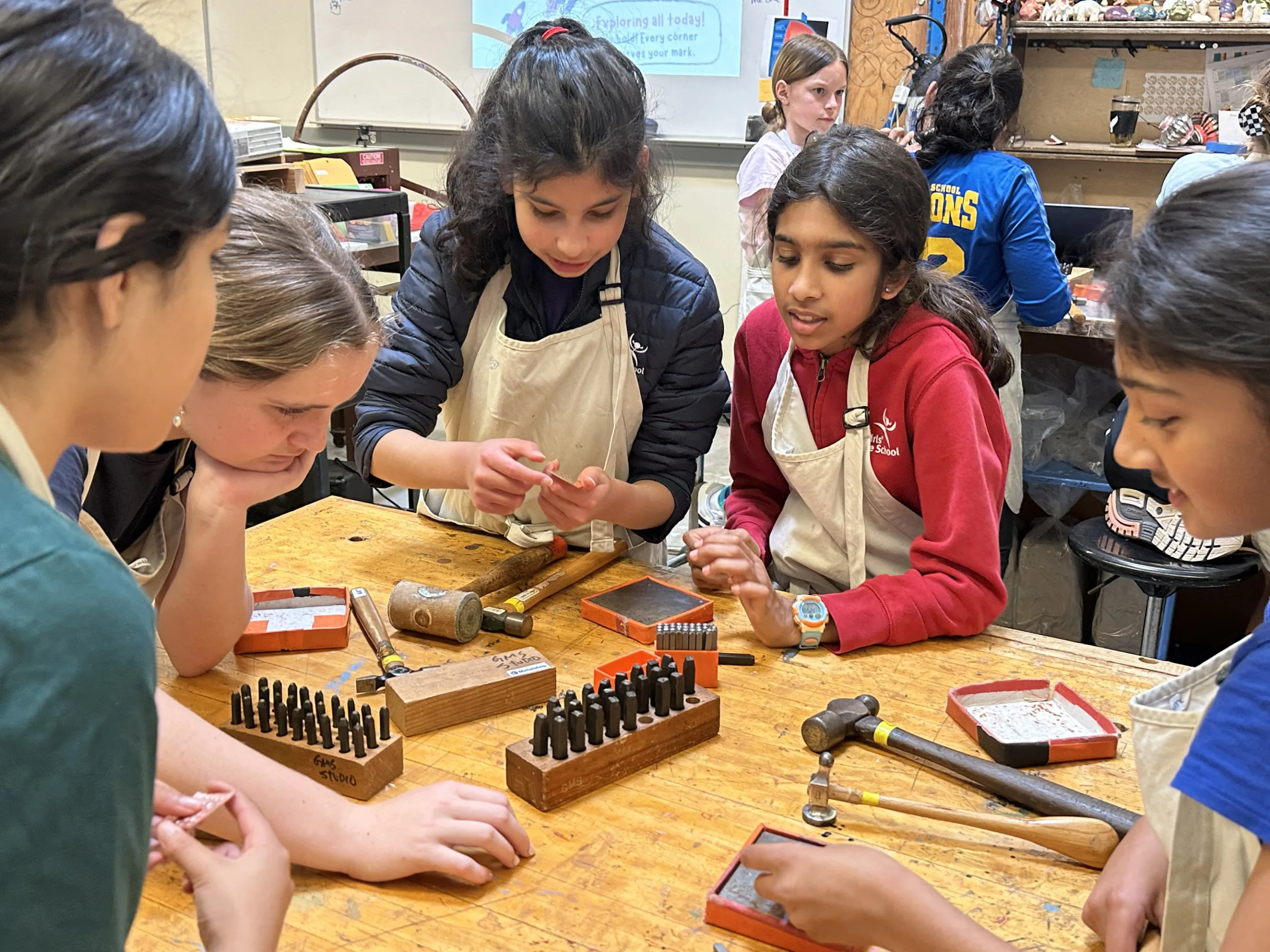
All GMS students have the opportunity to work not only in drawing and painting, but also in ceramics, woodworking, metalworking, music, drama, photography, and video production. In exploring these wide-ranging media and techniques, students gain confidence in their ability to experiment and take creative risks. At the same time, they are exposed to powerful tools for finding and expressing their voices and have opportunities to discover one or more ways to express their vision.
Why We Teach It
Serious engagement with a broad range of arts and media is central to the GMS approach to education. In these courses, students learn to be comfortable with pushing their limits, become creative problem solvers, and think critically about the visual, musical, and dramatic cultures of which they are both consumers and producers.
What We Teach
The GMS Computer Science curriculum provides a broad overview of concepts with an emphasis on programming skills and computational thinking. We address questions such as:
- How do computer hardware and software work together?
- How does the “design-code-test” cycle apply across different scenarios?
- How can we break down complex problems into basic building blocks?
GMS prepares students to identify which problems technology helps us solve and to express themselves through technological media. Through a variety of computer languages and tools, all students create effective and useful computer programs.
Why We Teach It
In today’s society, computer science is an essential tool. We prepare GMS students to sit at the table and be leaders in any field, and technology is no exception. We prepare them to identify which problems technology can help us solve, to express themselves and their interests through technological media, and to design and implement their ideas. Students experience the joy and satisfaction that comes from conversing with the computer and using it to devise new solutions, while gaining the confidence to apply computer science in creative ways in their lives.
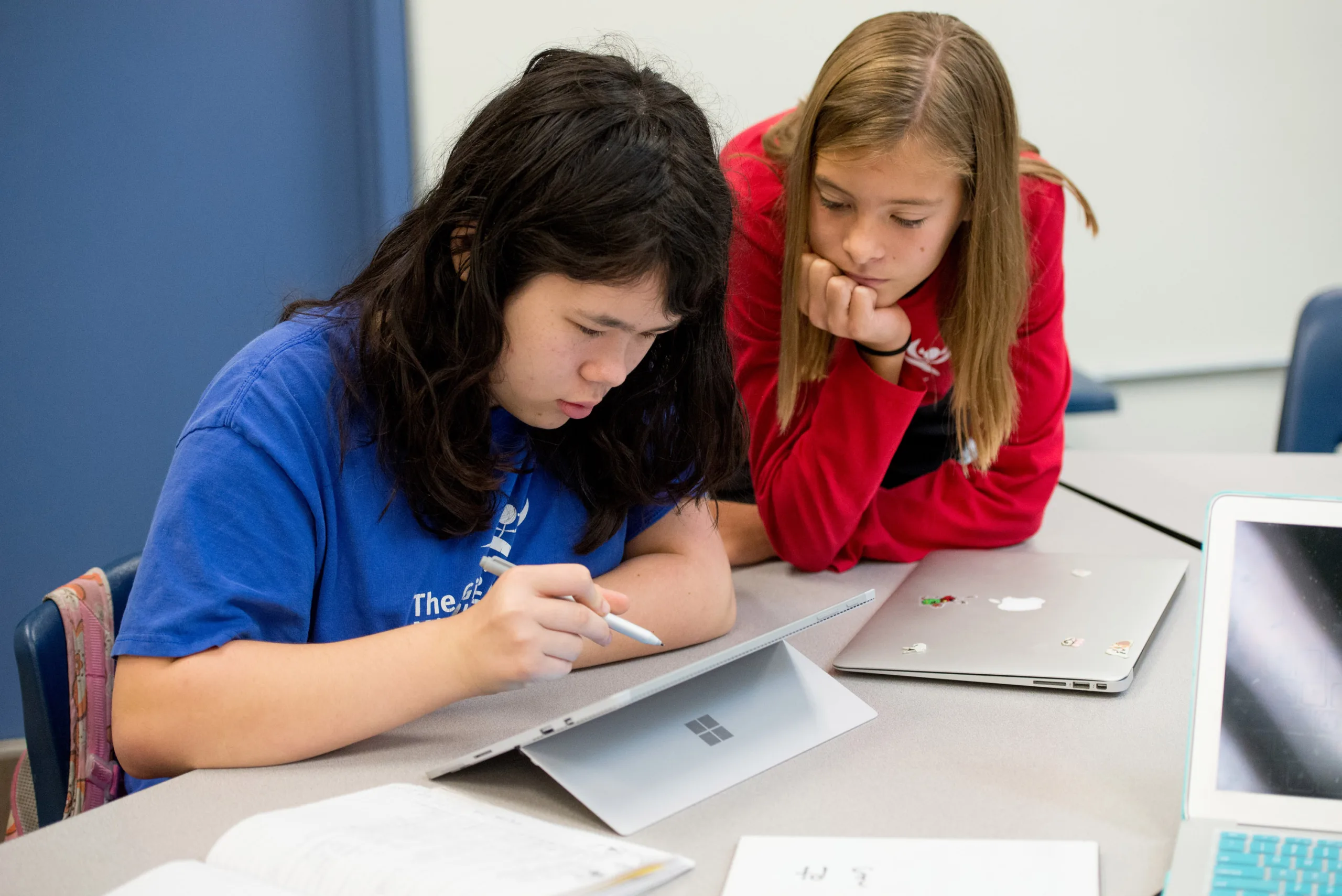
In sixth grade, students explore what it means to be effective users and creators of technology. As users of technology, we practice what it means to be responsible digital citizens. As creators of technology, we discover how to use computer science to express our ideas.
Laptop Tech Lab
For many students, a GMS laptop is the first piece of technology they take ownership of. With a “try it” attitude, students learn to use their laptops for school work, communication, organization, and digital creations. We start the conversation about what powers and what vulnerabilities we have as digital citizens, and how to take responsibility and heed safety for them.
Scratch Programming
Through a series of projects, such as animating a scene and building a story or a game, students develop a strong foundation in computational thinking skills and coding practices. Motivated by the desire to bring more creative programs to life, they discover and practice the fundamental components of an algorithm, object-oriented programming, decision-making flowcharts, synchronous and asynchronous functions, and understanding variables, conditionals, and loops. The students also learn various debugging practices, such as using code trace and print-style statements, and monitoring values in their code. In each project, we emphasize the iterative coding process of “design, code, test, repeat,” which encourages students to be creative, persistent, and open to new ideas.
Robotics
Using the VEX VR and V5 robotics platforms, students explore the essential features of a robot, first virtually and then physically. The students learn about robot configurations, movements, sensing, and energy. They transfer their computational thinking and programming skills to this field, where they learn to program various virtual robots in multiple environments to achieve tasks such as following directions, navigating a maze, or retrieving objects. They then assemble and code a simple robot using VEX V5 hardware, culminating in a “Walk-a-Pet” final project.
What We Teach
The Humanities Department at The Girls’ Middle School integrates language arts with social sciences, an approach that encourages students to develop an awareness of themselves, their community, and the world. Beginning in sixth grade, students investigate what it means to be a member of a community, broadening their perspective and helping them to understand commonalities in the human experience. In seventh grade, students analyze American society by drawing connections between key literary works and major events in United States history, placing special emphasis on the contributions of changemakers and the perspectives of artists and authors. In eighth grade, students look through the lens of justice to study history, literature, and culture around the world. Through the process of reading, writing, listening, and speaking, students become independent and critical thinkers.
Why We Teach It
The GMS Humanities Department prepares our students to become powerful communicators, deep thinkers, and positive contributors to a just society. The curriculum encourages students to think critically and make connections to a wide range of texts and disciplines. We nurture and support creativity, growth, and expression, and students develop the ability to communicate their ideas thoughtfully and fluently throughout the process.
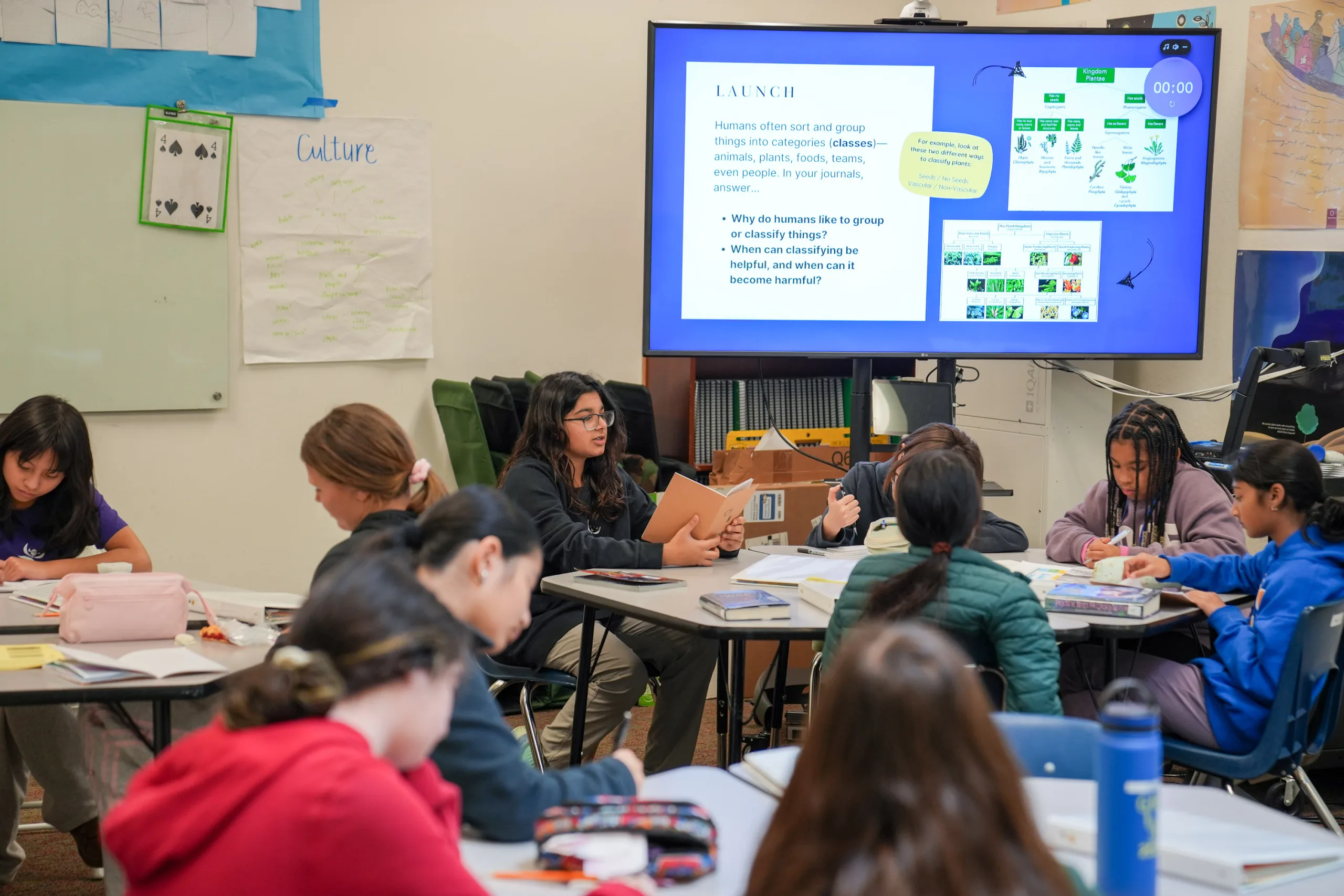
Sixth-grade Humanities builds the foundation for students to cultivate strong interpersonal and community-minded connections. Our curriculum actively examines the ideas of “justice” when approaching a piece of text, audio, or visual work by bringing in a historical/contemporary context and using theoretical knowledge to frame discussions. In particular, we aim to use critical literary lenses (eg. race, class, gender) alongside each primary text we read to tackle major themes. Students will be challenged to think deeply about multiple and overlapping perspectives, to ask thoughtful questions of one another, and to reflect through writing about why our learning matters to our own lives and the communities/world around us.
Our first semester’s themes and topics will center heavily on the ideas of storytelling and community; concurrently, students will work on foundational skills that include, but are not limited to, communication, collaboration, and self-advocacy as relevant to their academic as well as social and emotional development. The second semester’s focus will continue to build on these foundational skills through a more global perspective as well as additional opportunities for research and action within their communities.
Pre-Unit Kickoff: Community and Storytelling
Essential Question: What is a community? How do storytelling and listening help to form community?
Unit One: Community and Memory
Essential Question: What is the value of passing down stories about different communities throughout generations?
Primary text: The Egypt Game by Zilpha Keatley Snyder
Unit Two: Community and Identity
Essential Question: Why is it important to make space for different identities and cultures in our communities?
Primary text: The Moon Within by Aida Salazar
Unit Three: Community and Membership
Essential Questions: What may cause individuals or groups to be included in or excluded from a community, and how can we create a sense of belonging?
Primary text: Front Desk by Kelly Yang
Unit Four: Community and Justice
Essential Question: What kinds of communities based on justice can we imagine and then work to embody?
Primary text: On the Air with Zoe Washington by Janae Marks
Unit Five: Community and Action
Essential Question: How can we practice imagining the future we want and what would have to happen for this to exist?
Primary text: Choice of Speculative Graphic Novels
What We Teach
In a GMS math class, students investigate, communicate, and solve problems; they discover connections between concepts through deep exploration, not through the memorization of algorithms. Group conversations are central to our curriculum, CPM Educational Program. These discussions uncover multiple solving strategies, representations, and ways of thinking.
Sixth grade is a foundational year; students learn to articulate their reasoning, which helps build their number sense. In seventh grade, students continue to develop their problem solving, proportional reasoning, and abstract algebraic understanding. Emphasis is placed on a foundation of linear equations and geometric relationships. By the end of eighth grade, all students complete the equivalent of a Common Core State Standards High School Algebra I course, which includes linear, quadratic, and exponential functions, as well as the modeling of single and bi-variate data.
Why We Teach It
The math department teaches the way we do because we want to encourage an enthusiasm towards math. We intentionally create meaningful experiences in the classroom that lead students to discover and understand underlying mathematical principles. We want all students to appreciate the inherent beauty of math; through collaboration in class, we hope to foster a sense of wonder and fun!
Every day, we aim for students to:
- Be pattern seekers and view the world through “math eyes.”
- Use the following five ways of thinking to approach mathematics – justifying, generalizing, making connections, reversing thinking, and applying and extending understanding.
- Develop mathematical reasoning skills and persevere in solving complex problems. Effectively communicate their thinking about mathematical concepts in written, oral, and graphic form.
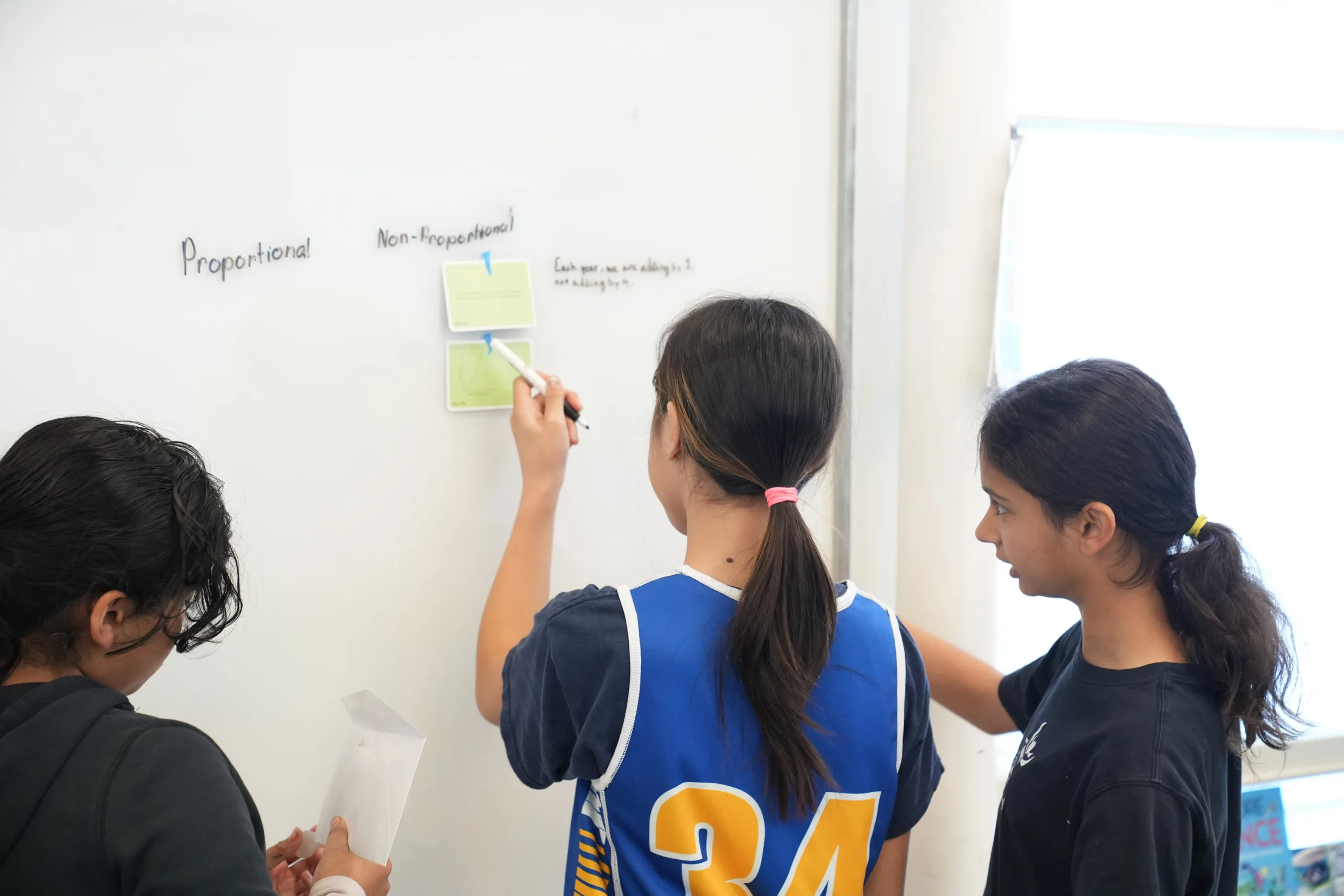
Sixth graders complete a year of dynamic CPM curriculum, drawing from the Core Connections, Courses 1 and 2 texts. Pre-Algebra skills are developed, refined, and extended. CPM’s unique presentation encourages students to make connections, discover relationships, determine what strategies can be used to solve problems, and explain their thinking. Learning in community and fostering a sense of fun are at the foundation of classroom culture in sixth grade math.
Units of Study
Unit 1: Representations of Quantities and Characteristics of Numbers
Unit 2: Representations of Data, Area of Rectangles and Generic Rectangles
Unit 3: Representations of Portions and Integers on a Number Line
Unit 4: Variables and Ratios
Unit 5: Fraction Multiplication and Area of Additional Geometric Shapes
Unit 6: Representations of Fraction Division and Algebraic Expressions
Unit 7: Rates, More Strategies for Fraction Division, and Equivalent Expressions
Unit 8: Statistics and Multiplication Equations
Unit 9: Volume and Percents
Unit 10: Probability and Integer Addition
Unit 11: More Integer Operations, Arithmetic Properties, and Proportional Relationships
Unit 12: Compound Probability
What We Teach
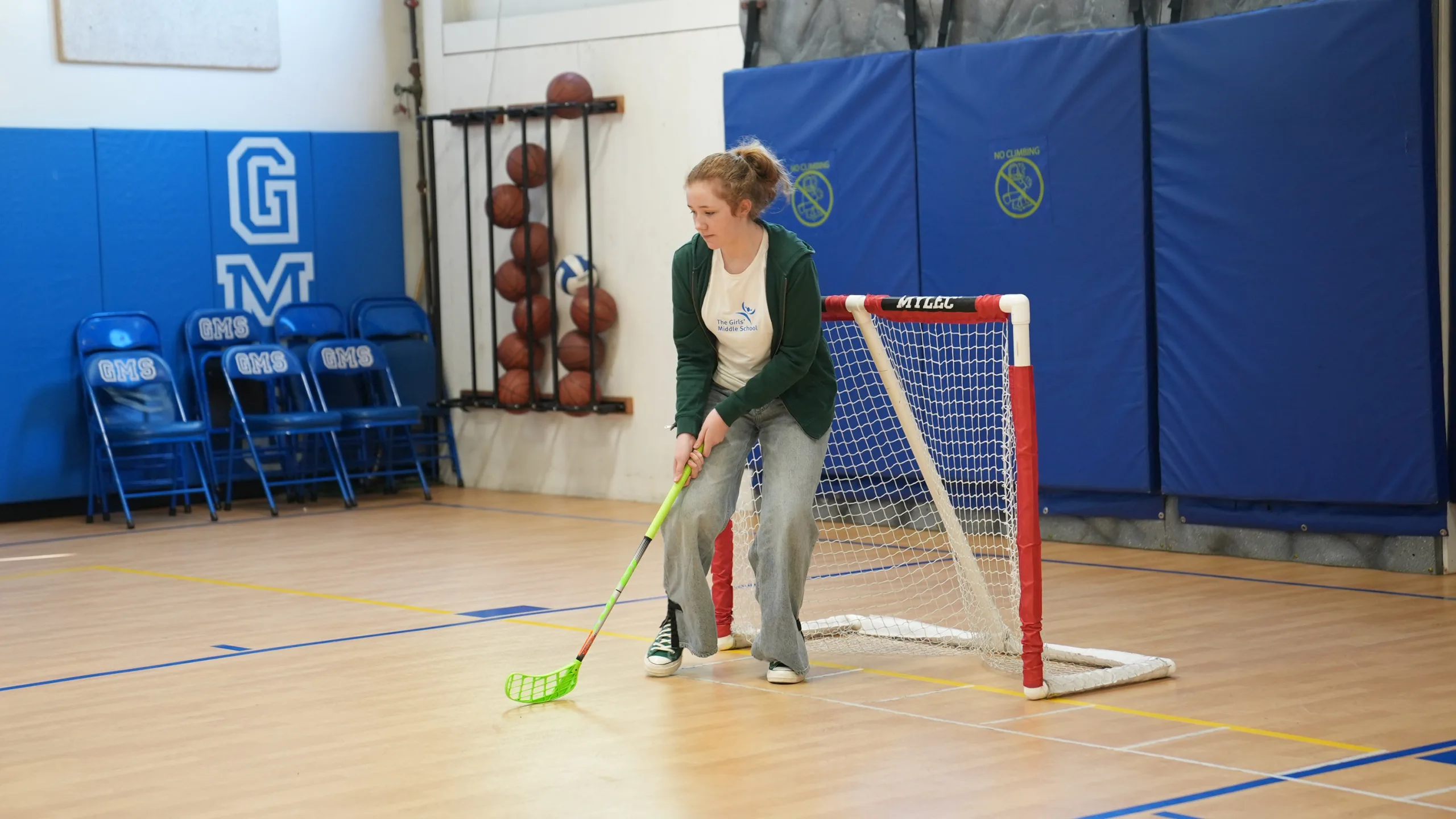
Physical Education classes include traditional sports such as basketball and volleyball, as well as nontraditional activities such as self-defense and skateboarding. GMS is proud to have a covered skateboard ramp and all of the necessary equipment to run a skate program. Highlights of the rainy season include fitness and African dance. Students are able to track their athletic improvement through fitness tests and various team challenges.
Girls discover sports by playing games to learn the rules and techniques rather than practicing repetitive drills. This approach to learning allows all girls to participate in every PE class and to work as a team to help each other improve. Units of study include softball, soccer, basketball, volleyball, lacrosse, tennis, flag football, track and field, fitness, running, African dance, self-defense, and skateboarding.
Why We Teach It
The physical education curriculum teaches the importance of being and staying healthy, and gives GMS girls the opportunity to learn and play sports in a positive environment. Making PE classes fun draws the students in, and they participate and exercise because they enjoy it. Finding the right type of exercise for each girl, whether a team or individual sport, is the goal. All students are expected to be involved to some degree all of the time. Students will test their skills at the end of a unit by competing in tournaments and playing on randomly organized teams.
What We Teach
The GMS science curriculum focuses on building science skills across students’ three years as they move through different disciplines. Sixth-grade students study Earth Science, which includes exploring Earth’s systems and Earth’s place in space. In seventh-grade Life Science, students study evolution, body systems, and science ethics, growing an understanding of the relevance and importance of science to our bodies and lives. Eighth-grade Physical Science includes both chemistry and physics using hands-on experiments to better understand how the world works and why taking care of our world matters.
Why We Teach It
We believe that science is accessible to every student. Each student’s inquisitive mind already makes them a scientist. In the words of Ellen Ochoa, the first Latina astronaut in space, “Curiosity is probably one of the most important characteristics that people have who go into science.” Science is a natural process of observing phenomena, wondering how the world works, and searching for answers in order to make sense of the world. Every student at The Girls’ Middle School is a scientist who learns and practices the skills that professional scientists use in their daily endeavors. Because science is a way of understanding the world around us, rather than a collection of vocabulary words and facts, the students engage in many hands-on explorations, inquiries, and projects as they explore the natural world.
Earth Science
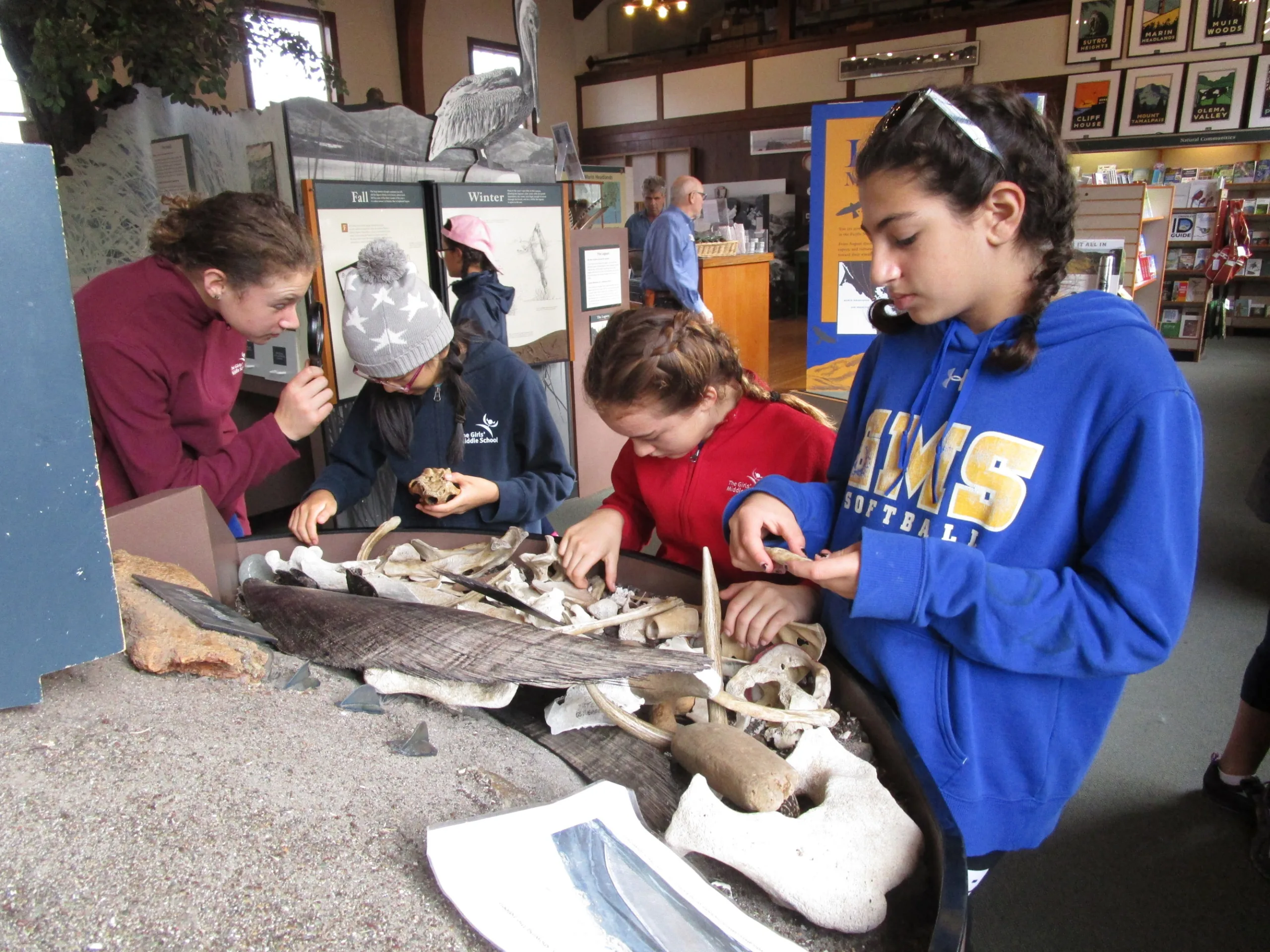
Students begin the year learning about the nature of Science and applying the scientific method to explore natural phenomena, including asking questions, formulating hypotheses, conducting experiments, analyzing data, and drawing conclusions. Throughout the year, students consider Earth’s place in space, learning about the characteristics of our solar system and the relationships between the Earth, Sun, and Moon. Students learn about the composition of the geosphere, hydrosphere, atmosphere, and biosphere. This includes topics such as rock properties and formations, plate tectonics, climate and weather patterns, the forces that shape Earth’s surface, and food webs. Lastly, students explore strategies for reducing pollution and promoting sustainability.
What We Teach
The Social and Emotional Learning (SEL) Program at The Girls’ Middle School supports every GMS student in their transition into the teenage years, providing them with the skills necessary to develop into a strong, healthy, self-aware young person. In a course that meets weekly for all three years at GMS, students have a safe space to explore complex issues. Within this framework, the SEL course addresses numerous topics of concern to teens with both candor and sensitivity. These include effective communication skills, values clarification, healthy relationships, conflict resolution, human sexuality, drug education, diversity, and self-awareness.
Why We Teach It
In SEL, emphasis is placed on creating a caring and compassionate environment in which adolescents learn that they are supported, as well as how to support one another. The class provides the time and space for GMS students to build healthy identities, examine their own internal worlds, and begin to understand themselves and expand their autonomy, which is central to adolescent development.
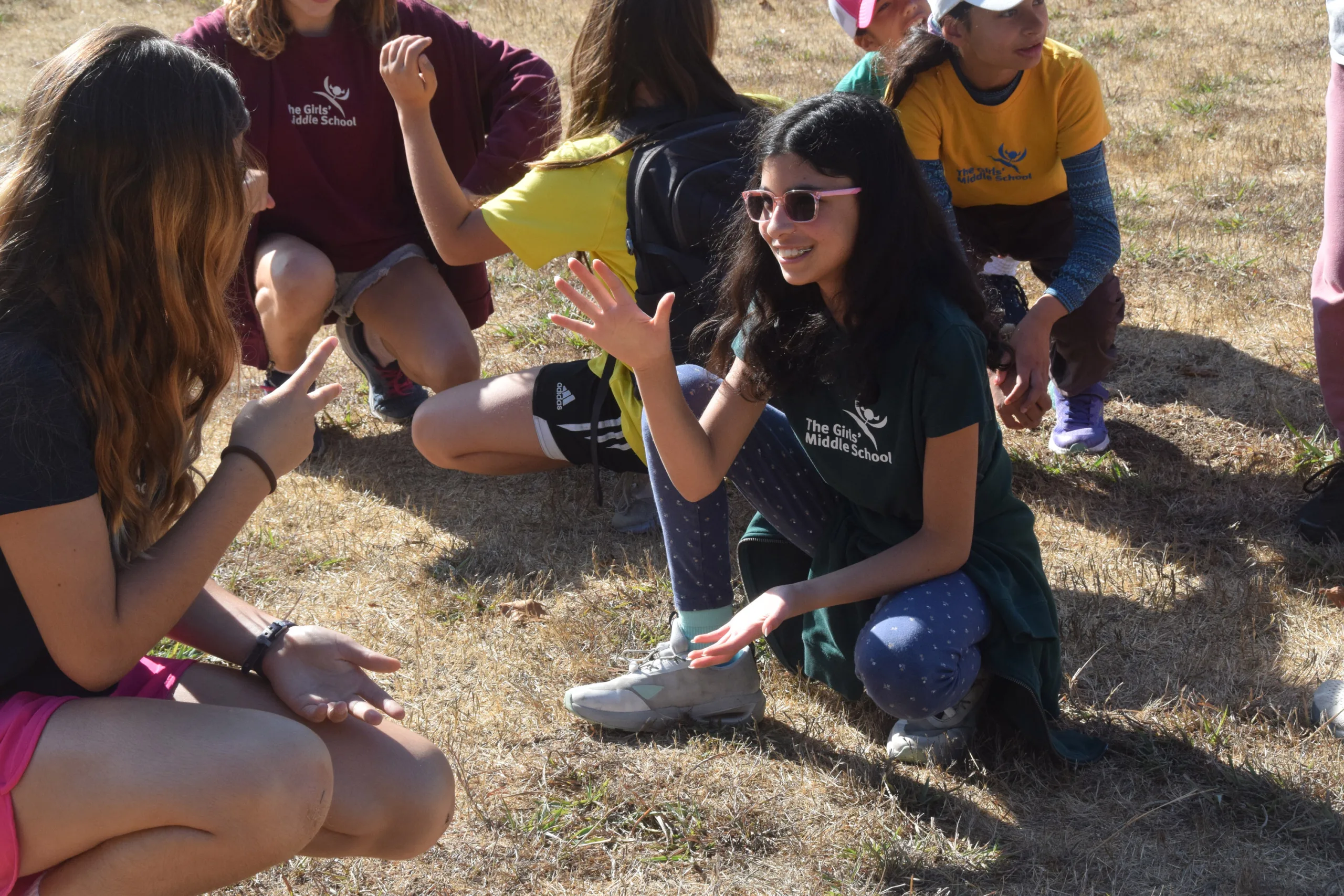
The sixth grade SEL curriculum teaches self-appreciation and inclusion of others. As a learning community we develop an understanding of individuals and we celebrate differences. The students do this through developing communication and conflict resolution skills. We examine and uncover the consequences of our actions, words, and sexual health. SEL provides a supportive and safe atmosphere where the students can discuss many of the challenges facing adolescent girls. In this course students also learn accurate information about puberty, health, and sexuality.
What We Teach
The Spanish department’s mission is to encourage students to appreciate and connect language and culture to the real world by improving their understanding of Spanish. Advancing students’ speaking, listening, and writing skills, while motivating them to learn and love Spanish, reinforces the importance of being bilingual in California. Each student understands that learning Spanish requires focus, motivation, practice, and a willingness to use Spanish during classroom activities and on a daily basis.
Spanish classes at GMS help improve fluent and non-fluent speakers’ literacy skills; however, it takes more than just skills to become a fluent or successful Spanish speaker. At GMS, each student engages in an individual and group Spanish-learning process that embraces an inclusive learning environment with engaging discourse and innovative instructional technology. Providing a respectful, rich, and safe classroom environment ensures that every student is able to apply herself, take risks, make and rectify mistakes, and work on her understanding and use of the language during her three years in the GMS Spanish Language Program
Why We Teach It
Spanish at GMS is an interactive program designed to provide a rich learning environment to our students. In both the fluent and the non-fluent speakers’ classes, students experience an engaging learning environment that uses challenging, exciting, and fun Spanish activities in the classroom and within the Latino community to enhance understanding of the Spanish language and its diverse culture and heritage.
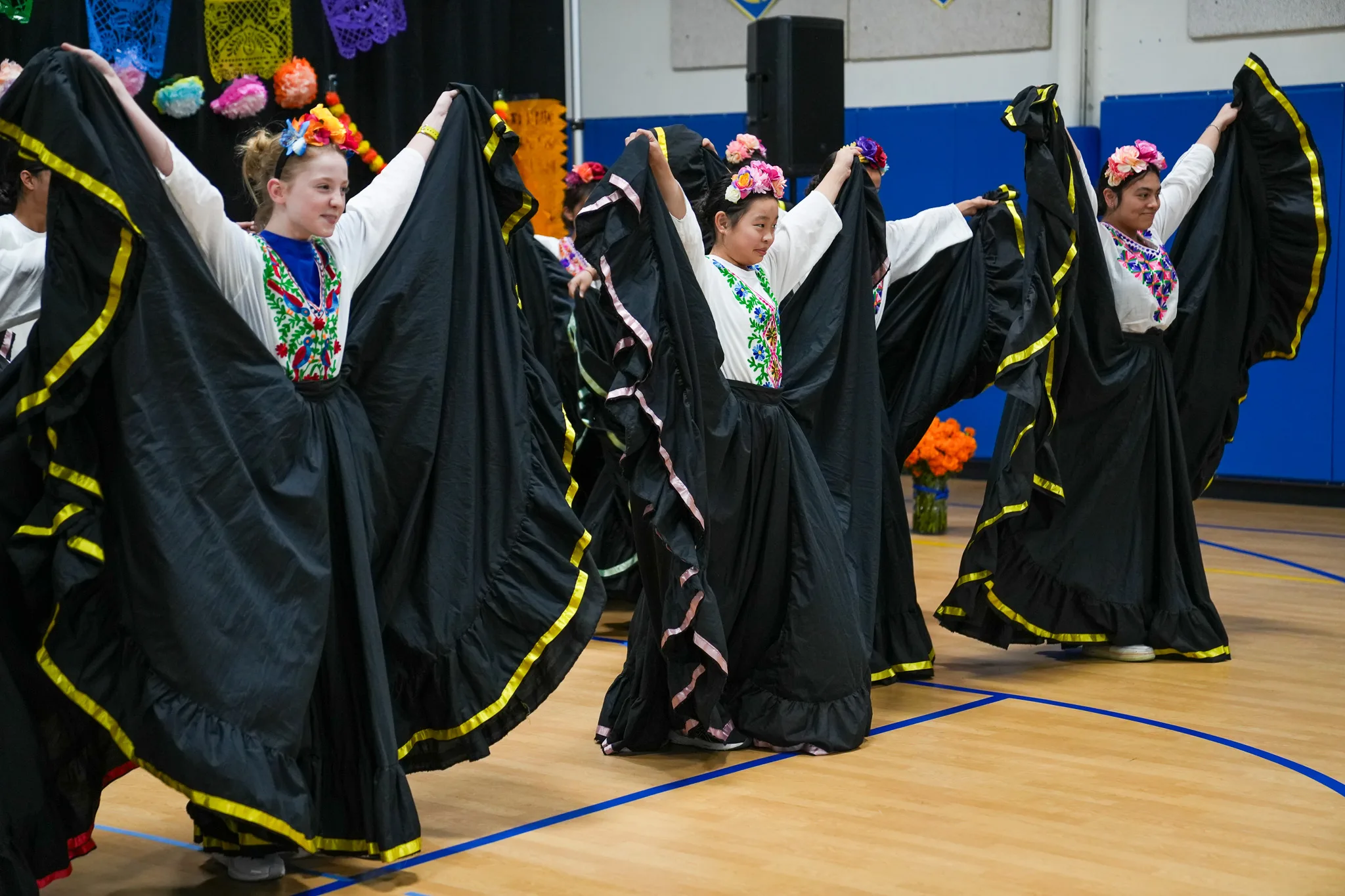
This course introduces students to the connection between language and culture. Students develop proficiency in oral comprehension and speaking as well as in reading and writing. They also get a better understanding of Spanish speakers by being aware of their customs and traditions. Every unit reinforces the use of technology, textbooks, projects, and different resources. The goal is to create an engaging, enriching, and rewarding environment where students gain confidence to speak in Spanish inside, and outside, the classroom.
Unit 1: Latino Culture in the United States
Why do we learn Spanish? Who am I? How does your family look?
Students explore the origin, customs, art, and music of different countries. They practice basic grammar and vocabulary and increase their listening and comprehension skills. Text: Las aventuras de Isabela
Unit 2: Traditions – Day of the Dead
What do we do to remember our dead people in the United States?
This unit focuses on an ancient indigenous Mexican holiday and has the objective of enriching cultural appreciation, values, and traditions from other cultures. Project: Sugar Skulls
Unit 3: At GMS
Tell me about your day at the school. What is your favorite subject at the school?
Students engage in simple conversations, understand details and basic ideas about school while they implement newly acquired vocabulary and grammar skills. Project: Design a map of GMS.
Unit 4: Food
What kind of food do Latino cultures eat? How can I describe my family’s eating habits?
Students learn different types of food between Latino countries and the United States, including different habits and attitudes about eating. Project: Design a Menu. Text: Las aventuras de Isabela
Unit 5: The House
Where is your favorite place in your home?
Students reflect and understand cultural aspects of different types of housing. They also focus on how poetry preserves and inspires the Latino culture. Project: Select, read and translate a poem.
This course provides students with a solid foundation in the four major language skill categories: listening, speaking, reading, and writing. The goal is to promote an understanding and clear appreciation of Latino culture, to practice advanced conversation skills, and to ask and answer questions using grammatically correct phrases and expressions. Students apply vocabulary, spelling rules, and grammatic structures in oral and written assignments and projects. They explore varied texts: story tales, fiction, anecdotes, legends, and short plays, with accompanying written and oral activities. Students engage in two research projects and use the workbook, Español Esencial I, for reinforcing grammar skills. The use of Rosetta Stone and other technology complements a fun and rich learning environment.
Unit 1: Spanish Origin – Why do we learn Spanish?
Students investigate and reflect on how the Spanish language became so widely spoken, where did it originate, and how did it spread across the globe to be spoken in so many countries, and by so many people, today. Text: Me llamo María Isabel
Unit 2: Day of the Dead Celebration – What is its significance?
This unit focuses on an ancient indigenous Mexican holiday and has the objective of enriching cultural appreciation, values, and traditions from other cultures.
Unit 3: The Story Tale – How do I read, analyze, and create my own story tale?
Students are introduced to characteristics of story tales that help them develop an appreciation of this genre of Latino-American fiction; they plan and write their own story tales. Text: Tulia y la Tecla Mágica
Unit 4: Language and Culture in the Real World – How does language reflect a culture?
Language is the primary medium for transmitting much of culture; without language, culture would not be possible. Students read and comment on different newspaper articles connected with the real world and work in teams to create a TV News Show.
Unit 5: Poetry – How do I perform an oral poem in front of an audience?
Students learn diverse techniques for memorizing and performing a Spanish language poem in front of the group, and are encouraged to participate in our annual Spanish Poetry Contest.
Unit 6: Writing an Anecdote – What distinguishes real and fictional stories?
Students engage in diverse real and fictional stories that create a sense of magic and wonder about the world.
Unit 7: Research and Performance
Students connect the Spanish language with different subjects by selecting a research project and creating both a written and oral presentation. Consequently, they learn the parts of a theater play, dramatize different dialogues, write a script, and perform the play in front of the class.